Old Chemistry Building
Cincinnati, OH
Historic Science Building Expansion Strengthens Campus Life at UC
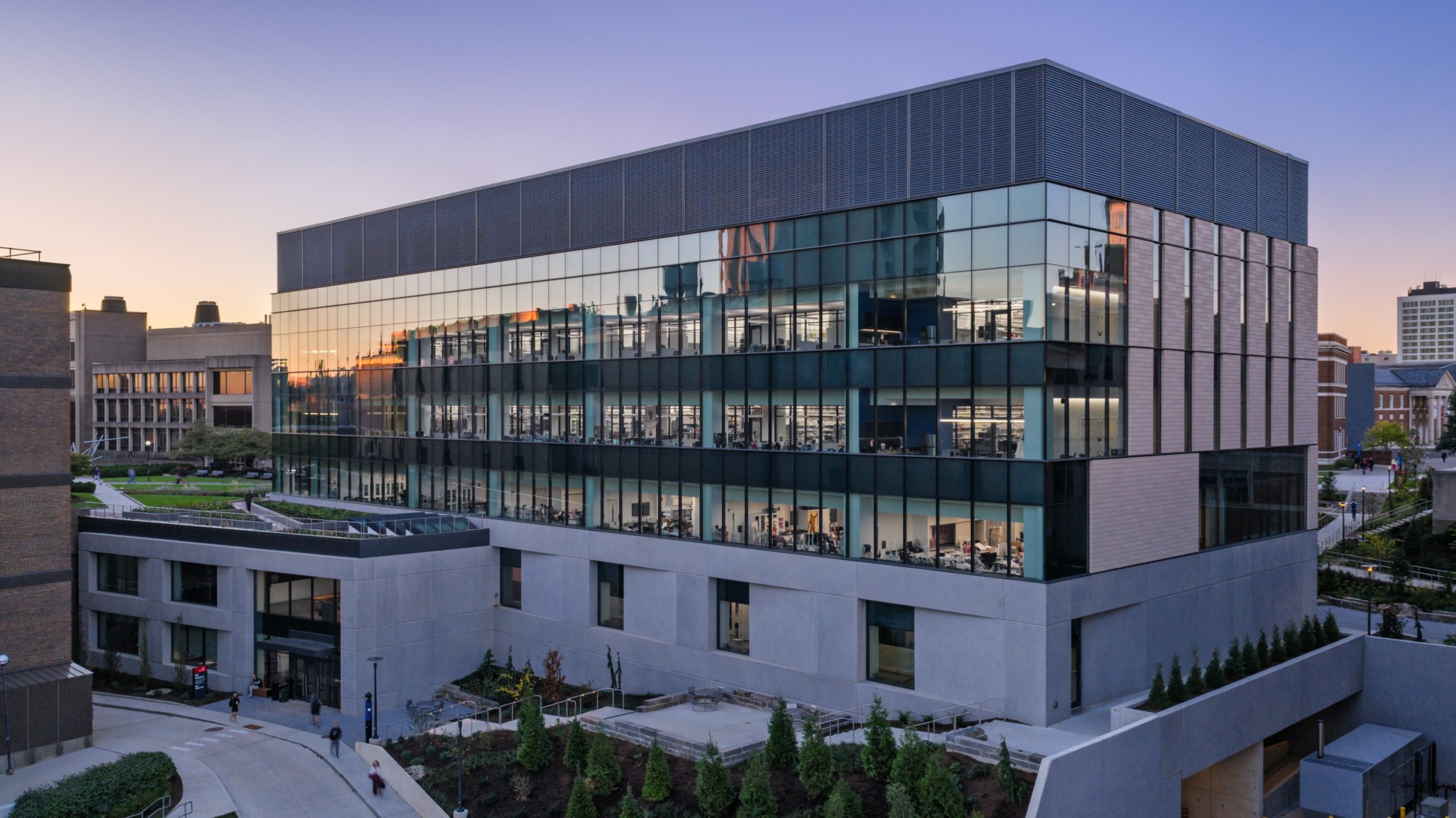
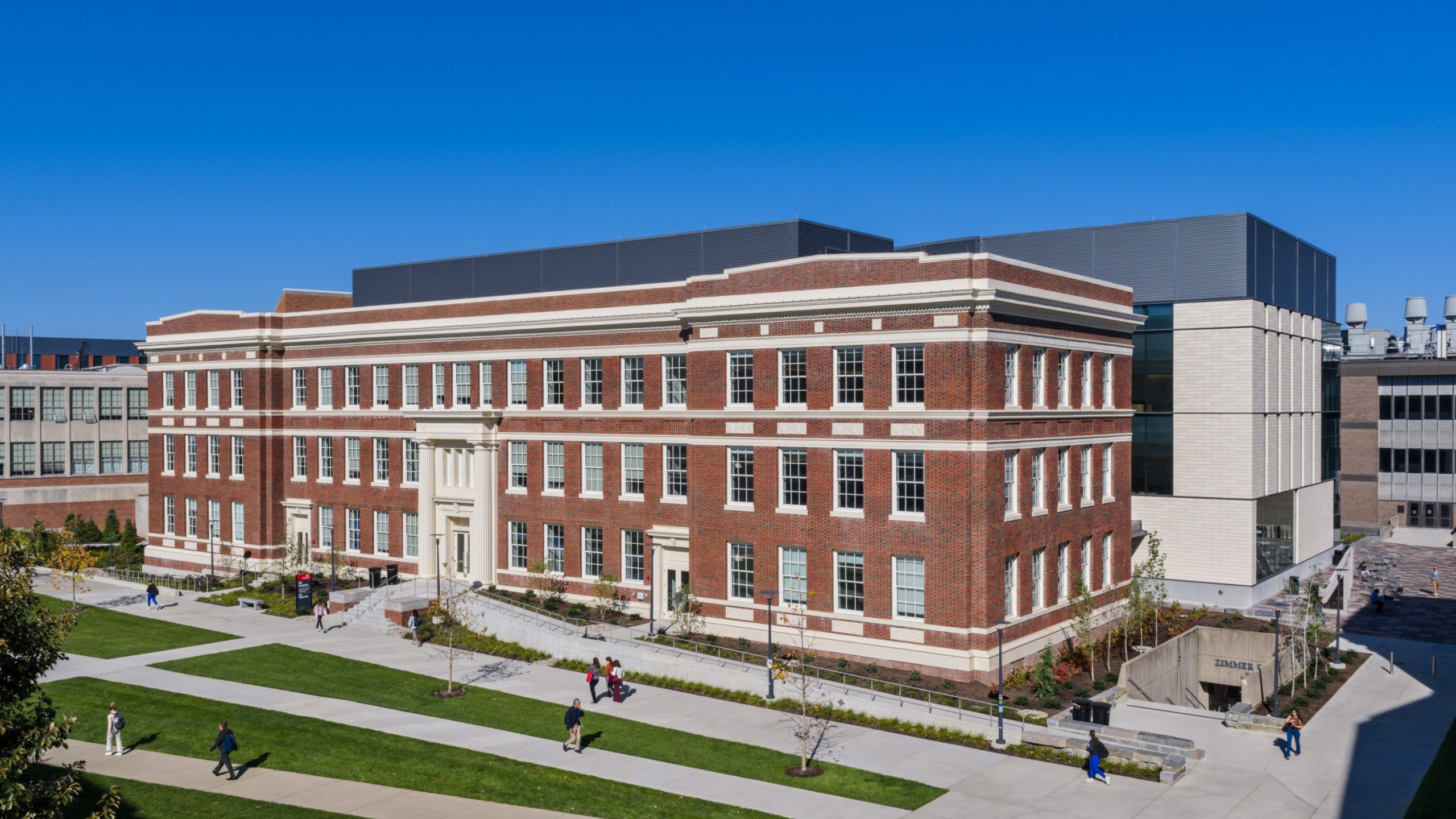
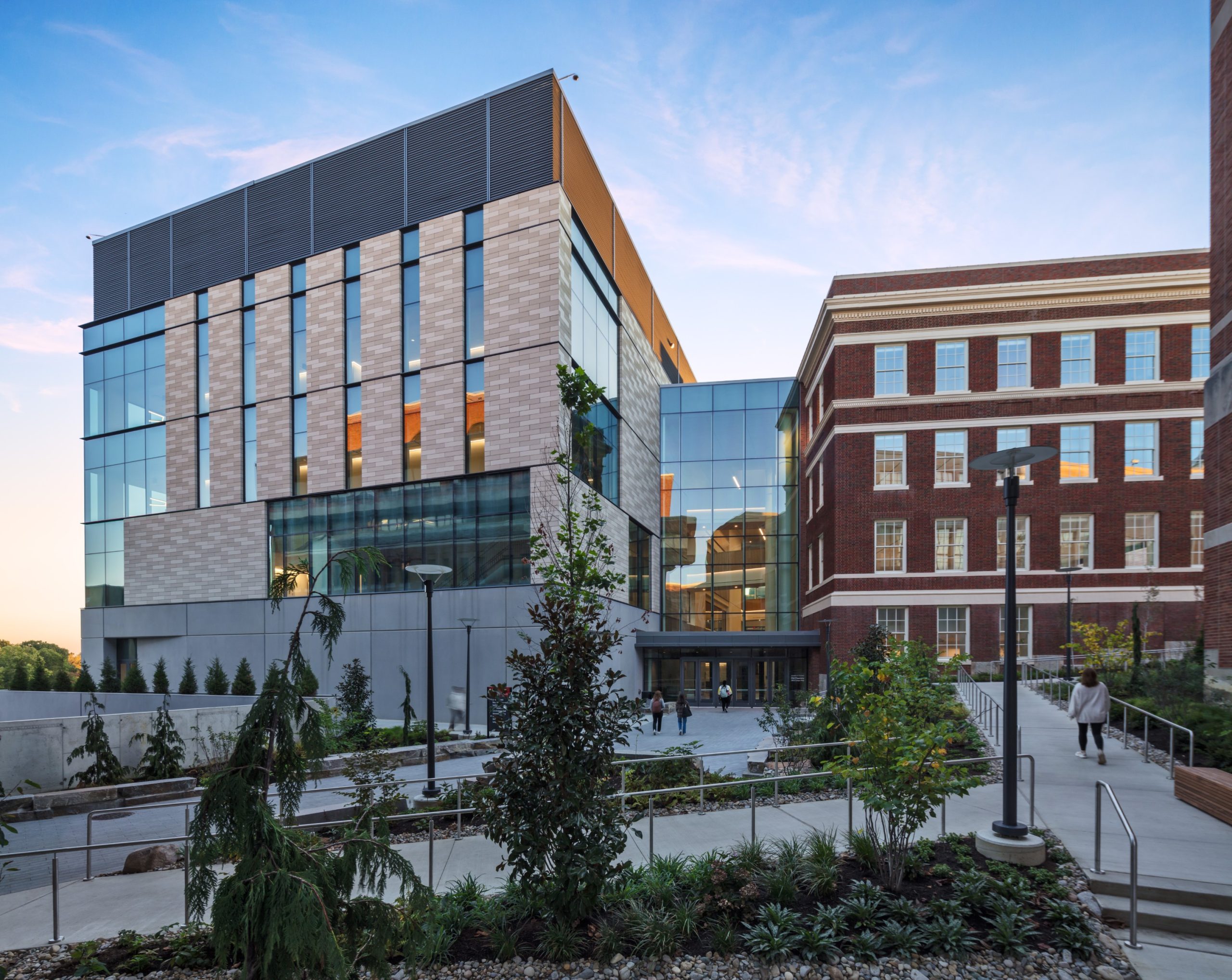
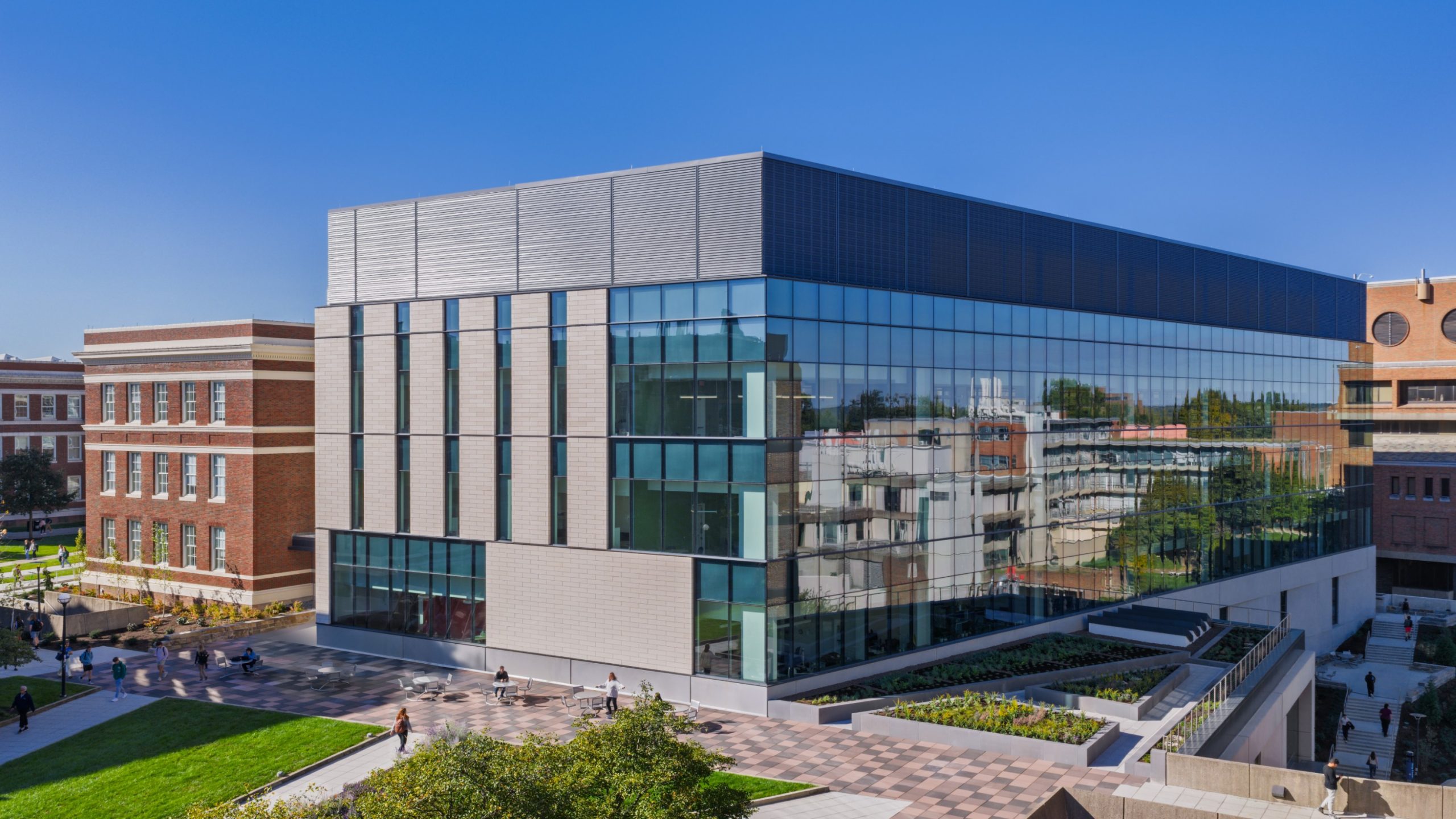
The renovation and expansion of the historic Old Chemistry Building at the University of Cincinnati redefines one of its earliest academic landmarks as a contemporary center for science, collaboration, and student life. Originally constructed in 1917, the project carefully preserves the character and material presence of the historic structure while introducing a new laboratory wing and interconnected learning environment. Together, these interventions extend the building’s legacy while transforming it into a more open, connected, and active academic destination within the heart of campus.
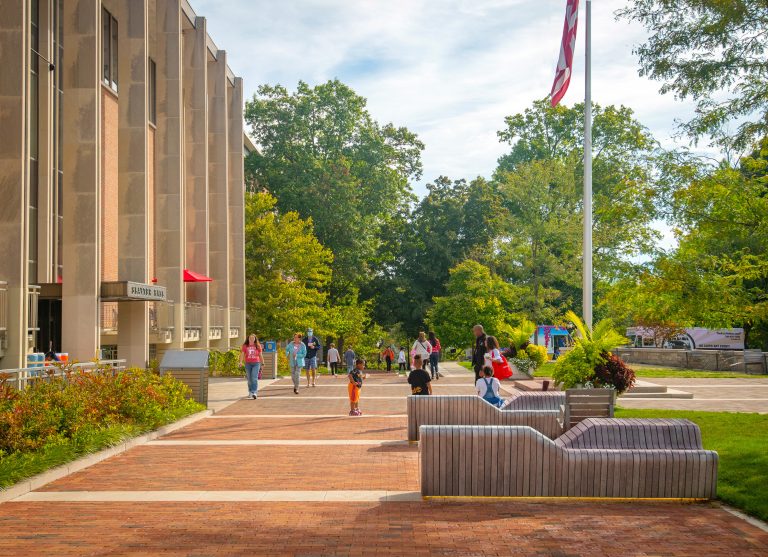
Set within UC’s dramatic hillside, the landscape is used to resolve significant grade change and reconnect the building to the surrounding campus fabric. Rather than treating topography as a constraint, the design embraces it as a structuring element, shaping movement, arrival, and outdoor experience across multiple elevations. A continuous system of pathways, ramps, and terraced plazas creates intuitive circulation while linking the adjacent quad, building entries, and interior program to a cohesive pedestrian network.
The renewed Zimmer Plaza establishes a clear and welcoming campus threshold, transforming the primary approach into a more defined civic and social space. From this entry sequence, circulation unfolds across a series of interconnected exterior rooms that step with the hillside.
On the north side of the building, the Dr. Lucy E. Braun Terrace Garden features a sequence of planted terraces and outdoor study spaces. Named in her honor, the garden reflects the university’s ecological and academic legacy through layered planting and a focus on native systems and seasonal change. It functions as both a commemorative landscape and an active extension of campus learning.
Additional landscape zones reinforce the transition between historic and contemporary architecture, softening edges with layered planting, seating areas, and informal outdoor spaces that support student interaction and academic spill-out. These areas extend the building’s program outward, reinforcing its role as a lived-in, day-to-day part of campus life.